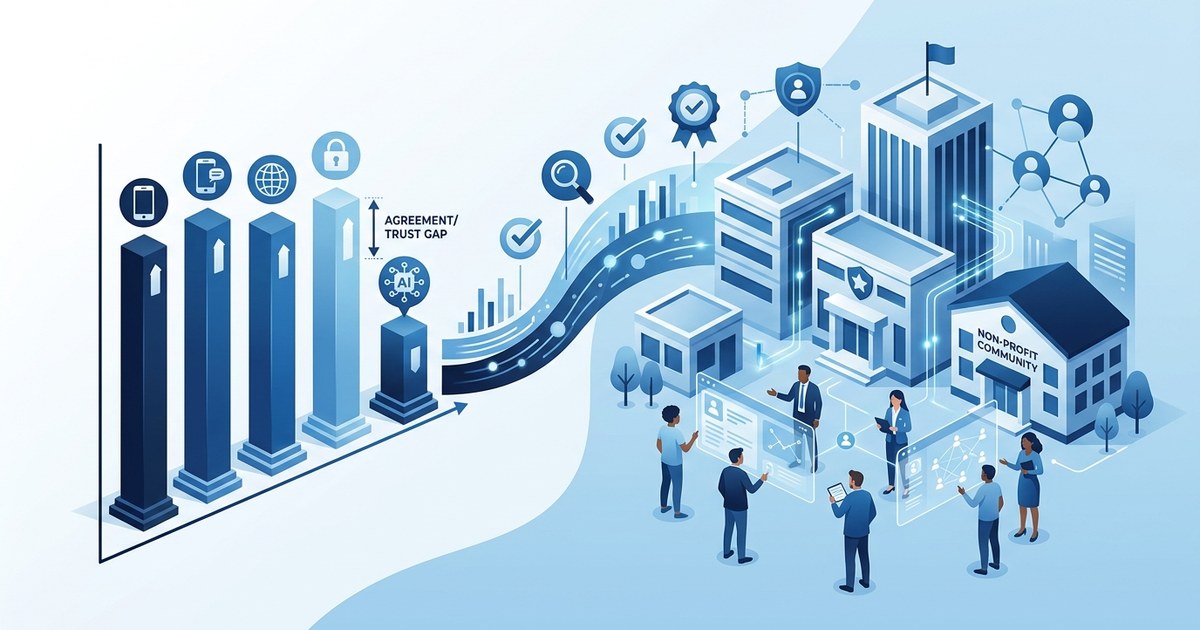
Have you ever wondered how well AI chatbots cite their sources? A recent study, published on 26th August 2026, sheds critical light on this issue. The research reveals that popular AI chatbots universally employ poor source citation, with a median completeness of just 40%. Gemini, in particular, scored low and generally provided the fewest citations. These findings, stemming from an audit of health advice, show that the way AI systems present and substantiate information is still far from optimal.
Why this is Crucial for Non-profits and the Public Sector
For non-profit organisations, charities, government agencies, and international NGOs, reliability and transparency are the cornerstone of your mission. Your target audience – whether donors, citizens, grant providers, or stakeholders – must be able to trust that the information you provide is accurate and substantiated. If AI assistants summarise your information but omit sources or provide incomplete ones, this can lead to:
- Erosion of Trust: Users cannot verify the origin of the information, sowing doubt about its accuracy. This is particularly sensitive when dealing with topics such as health, financial aid, legal issues, or social projects.
- Reduced Discoverability and Recognition: If your organisation is not clearly cited as a source, you miss the opportunity to be recognised as an authority and to drive traffic to your website for more in-depth information or contact. This indirectly affects your ability to attract donations, recruit volunteers, or fulfil your public duties.
- Spread of Misinformation: Without clear source attribution, it is harder to correct or trace erroneous AI generations, which can lead to reputational damage.
What Does This Mean for You?
The results of this research emphasise that you cannot blindly rely on the citation quality of AI chatbots. Your content strategy must adapt to this. Here are some practical tips:
- Structure Your Content for Extraction: Ensure that the core messages and key facts of each page are clear and independently readable. AI models often extract passage-level information; make these passages immediately valuable, even outside the context of your entire page.
- Emphasise Authority and Expertise: Use structured data (schema.org) to explicitly mark your organisation, authors, and their expertise. This helps AI systems recognise the credibility of your content.
- Make Your Sources Internally Verifiable: If you cite figures, facts, or studies, don’t just link to external sources, but also ensure that internal pages substantiate and elaborate on them where necessary. This strengthens your own domain as an authoritative source.
- Focus on ‘Firsthand’ Experience: Google’s AI Overviews are already explicitly attributing ‘firsthand’ sources, displaying names of creators and communities for citations from social media or discussions. As a non-profit, you often have unique, direct experiences and data. Share these on your website in a clear, attribution-friendly manner.
Even if AI systems have not yet fully mastered source attribution, you can ensure that your content is so robust and reliable that it is always seen as a valuable, verifiable source of information. Your role in building trust in the AI era is greater than ever.
Source: News-Medical.net